










Optimized alkali-activated binder systems
Project-specific advisory around fly ash, GGBS, aggregates, activators, curing conditions, workability and target performance.
Full service page →
 ®builds concrete's future, without cement.Mix design. Binder systems. Component development.
Optimized geopolymer mixes for prefab production and in-situ construction, supported by alkali-activated binder advisory, pilot programmes, production guidance and technology transfer.
A construction-materials venture shaping sustainable binder and concrete pathways for real production and site conditions.
Alkali-activated binder advisory, geopolymer mix optimization, prefab and in-situ material pathways, pilots and production support.
Fly ash and GGBS are alkali-activated into a dense stone-like binder without Portland cement.
Research trials and field exposure studies inform how we think about performance in demanding construction environments.
Project consulting, pilot mixes, material strategy, technology transfer, licensing and production support.
See how GEOPOLYX® brings binder chemistry, mix optimization and implementation thinking together to shape practical material solutions for construction.
GEOPOLYX® works where binder chemistry meets production and site reality: alkali-activated binder advisory, geopolymer mix optimization, prefab and in-situ applications, repair material mixes and project-specific material strategy.
Project-specific advisory around fly ash, GGBS, aggregates, activators, curing conditions, workability and target performance.
Full service page →Pavers, blocks, slabs, panels, repair materials and tailored elements for everyday construction, with structural-grade material development moving deeper into the pipeline.
Full service page →Binder proportions, activator strategy, aggregate compatibility, curing, workability, strength development and available production routes are considered together.
Guidance for choosing where geopolymer, alkali-activated binders, repair materials or hybrid sustainable approaches fit a project responsibly.
Binder selection and mix tuning for repair materials, coordinated with the substrate, placement method and defined performance requirements.
Explore mix development →Engagements can move from feasibility and trial mixes into supervised pilots, licensing, production support or carefully scoped collaborative R&D.
Full service page →Material solutions Structural solutions
GEOPOLYX® develops construction-material systems and implementation pathways. STRUCTOLYX® develops structural assessment, analysis, design and verification. The brands operate in parallel, with each enquiry directed by the engineering question it must resolve.
Explore structural solutions →Geopolymer concrete starts where cement never goes: fly ash and GGBS, activated by alkaline solutions into a dense, rock-like binder. No clinker. No Portland cement. No treating low-carbon construction as a compromise.
Fly ash & GGBS - millions of tonnes of "waste" rich in silica and alumina - are sourced and characterised.
Sodium silicate & sodium hydroxide solutions dissolve the glassy phases, releasing reactive Si and Al species.
Si-O-Al bonds polymerise into a rigid 3-D aluminosilicate gel - the same family of bonds that holds natural rock together.
Proprietary catalytic techniques accelerate and refine the reaction - boosting strength, workability and consistency.
A dense, durable, chemically resistant concrete system - cast into blocks, slabs, pavers, repair materials and structural components.
Dense microstructure with excellent resistance to sulphates, acids, chlorides and fire - engineered for infrastructure lifetimes.
Rapid strength gain suits precast cycles and fast-track construction - with mixes tunable from ambient to accelerated curing.
Cement production drives ~8% of global CO₂. By replacing clinker, geopolymer binders can significantly reduce embodied carbon depending on materials, activators and transport.
Fly ash and GGBS are brought back into construction value: waste streams become binders, and binders become useful built forms.
Alkali-activated binders echo ancient stone chemistry - the same aluminosilicate bonds found in structures that have stood for millennia.
Pavers, blocks, slabs, tiles, kerbs and repair materials: the components crews already know, cast from zero-cement geopolymer mixes and optimized for prefab yards or in-situ construction. If cement concrete can make it, our binder can make it cleaner.
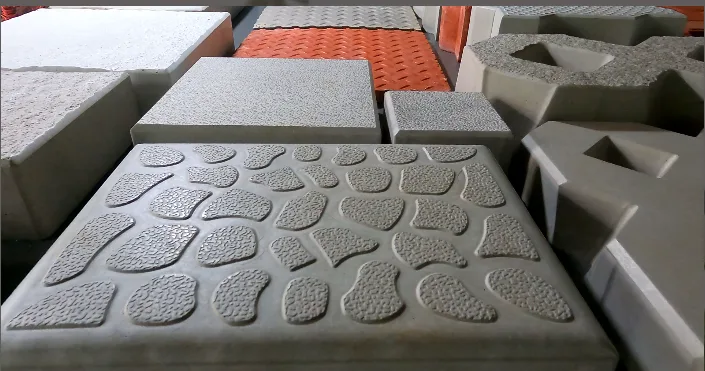
Cobble-pattern, stone-finish and smooth outdoor tiles for landscapes, yards and public realm - made for finish, handling and abrasion resistance.
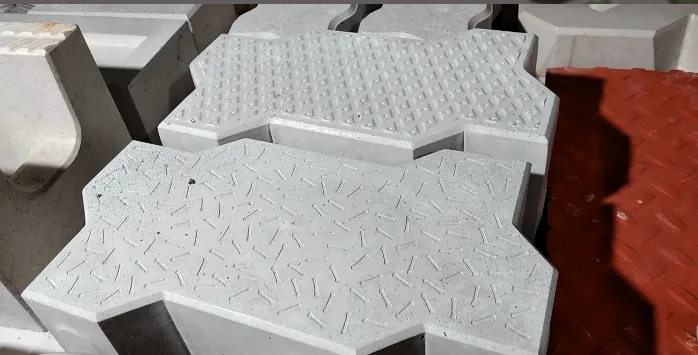
Zig-zag interlocking pavers and tactile guidance blocks for roads, footpaths and accessible public infrastructure.
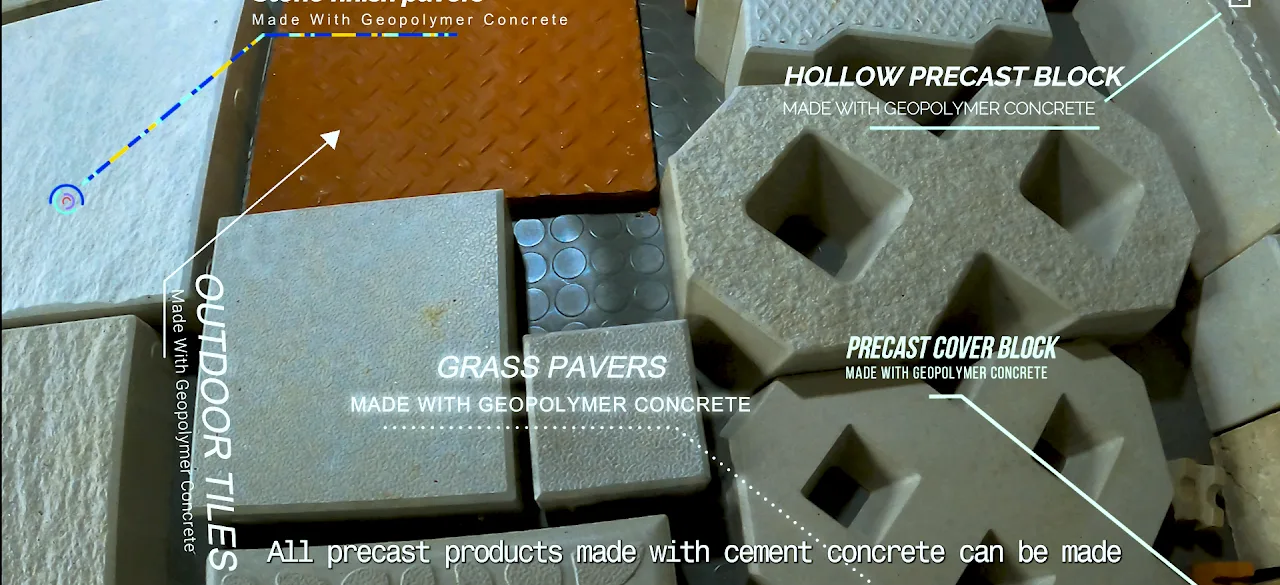
Hollow blocks, cover blocks and grass pavers for practical construction yards - every geopolymer unit designed without Portland cement.
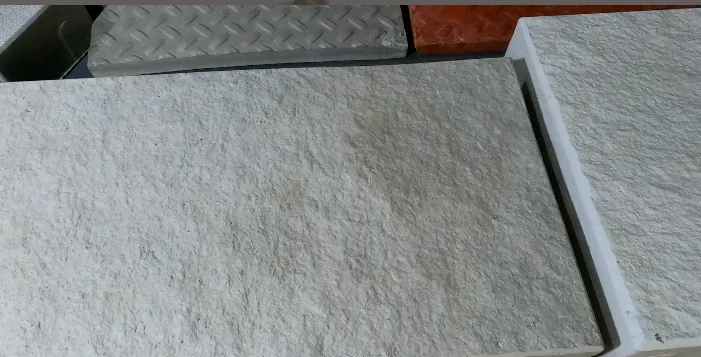
Natural stone aesthetics from activated industrial by-products - slabs and panels for cladding, flooring and hardscape.
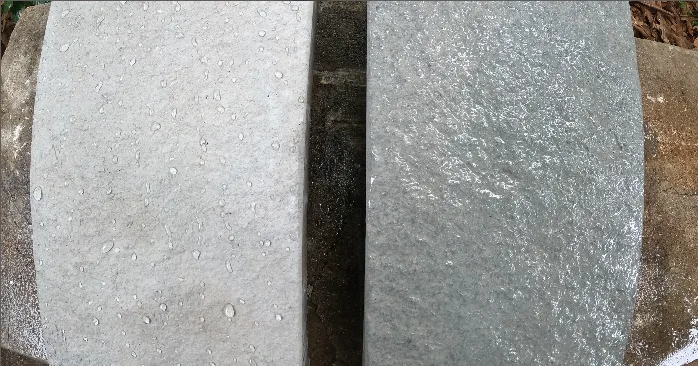
Dense, low-permeability mixes developed for moisture, chlorides and aggressive exposure, including the material questions common in coastal construction.
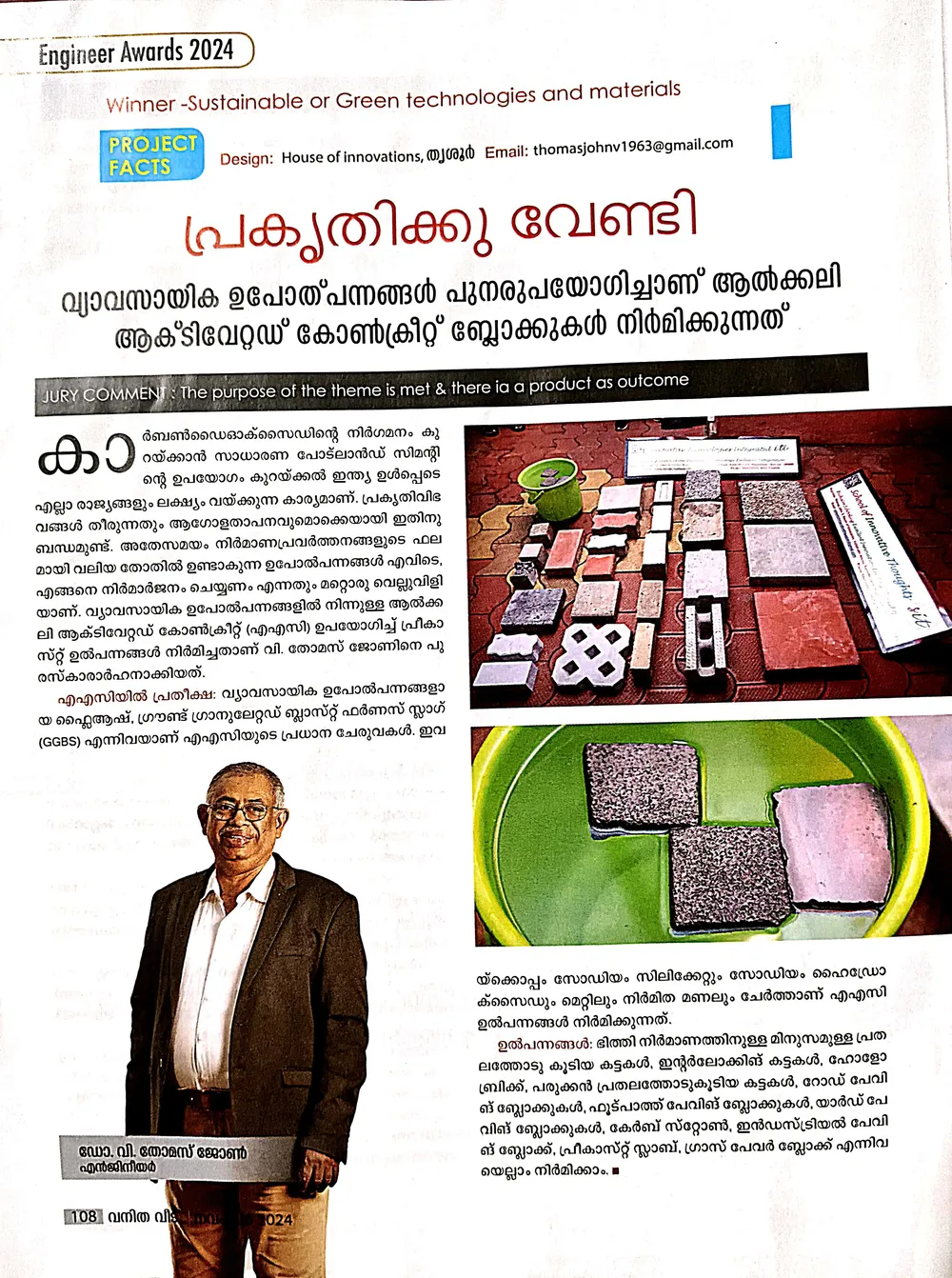
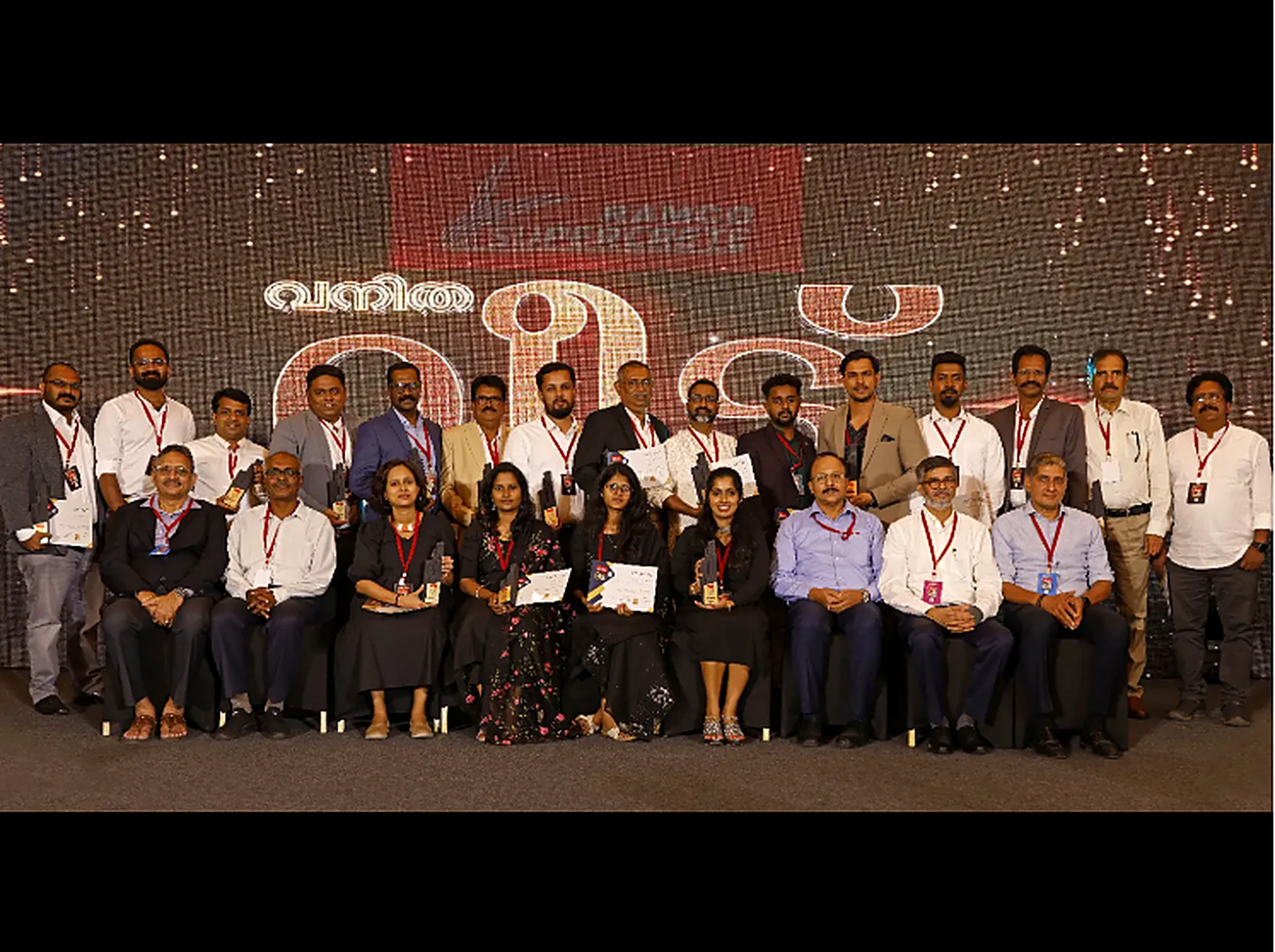
The portfolio that won Engineer Awards 2024 (Sustainable & Green Technologies) - judged on real products, not promises.
GEOPOLYX® research materials have faced live traffic, monsoon weathering, wetting-drying cycles and coastal salt as part of the research record, so the lessons of abrasion, exposure and time sit inside every recommendation we make.
What project teams receive is the distilled version: material strategy, optimized binder pathways, component development, repair guidance and implementation support that has already argued with the weather.
Research-scale placements have helped the team observe workability, curing, surface wear and strength behaviour under practical use conditions, not only polished laboratory specimens.
Geopolymer components have also been installed in coastal saline exposure conditions, including along breakwater and tetrapod zones, to understand material behaviour under aggressive coastal stress.
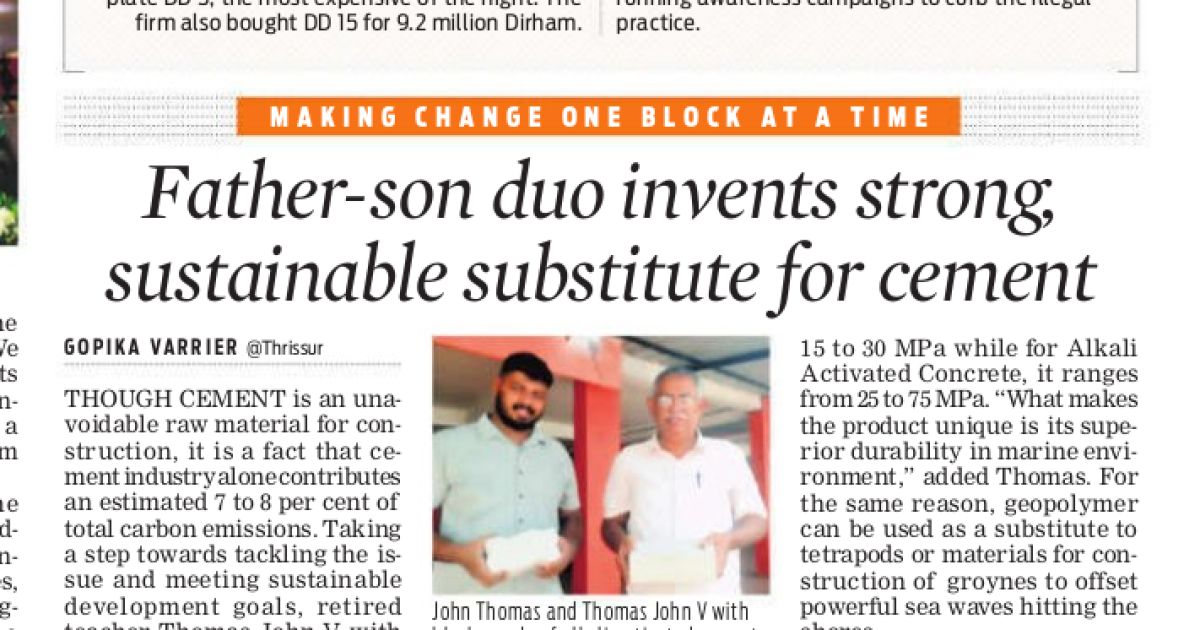
Independent eyes on fourteen years of zero-cement work.
CLICK TO READ
 CLICK TO READ
Portland cement accounts for roughly 8% of global CO₂ emissions, so the construction world is looking hard at alkali-activated alternatives. GEOPOLYX® keeps its centre of gravity in useful mix delivery, then widens into careful R&D when a project has a real reason.
Current work is aimed at stable strength, workability and curing behavior for routine precast and in-situ construction, using practical raw-material conditions.
We are moving deeper into application-specific mixes for structural components, repair systems and project-level performance constraints.
One-part field systems, lower-carbon curing routes and advanced production pathways can be taken up now as scoped development with the right project or partner. Conductive engineered geopolymer composites have also been developed for tailored triboelectric energy-harvesting applications.
Geopolymer concrete is no longer a scientific curiosity - it is entering standards frameworks across the world. GEOPOLYX® formulates, tests and documents mixes in line with the evolving international landscape.
Use of Alkali Activated Concrete for Precast Products - Guidelines. The Indian framework our precast range is aligned with.
Alkali-Activated Cements - Report. The ACI reference on chemistry, properties and performance of AAC binders.
Recommended Practice: Geopolymer Concrete - the world-first national guidance for geopolymer design and use.
Performance-based specification for hydraulic cement - the widely used performance route for non-Portland binders.
Also tracked: RILEM technical committee outputs on alkali-activated materials, BS EN performance-equivalence routes, and state DOT / NHAI pilot specifications. Compliance documentation is prepared per project geography.
"The site is the real witness. Materials must answer to weather, wear, salt and use."
GEOPOLYX® Founding TeamGEOPOLYX® is inviting potential investors, precast manufacturers, infrastructure teams and project owners to collaborate on optimized geopolymer mixes, prefab components, licensing, production support and technology transfer.
Project-specific geopolymer concrete mix development, licensing, production playbooks, QA/QC support and hands-on guidance for prefab yards, in-situ pilots or manufacturing partners.
Trial batches, witnessed testing, pilot pours and production support for pavers, blocks, slabs, repair materials, structural components and custom precast units.
Feasibility, trial planning, performance targets and implementation routes for project-specific lower-cement and zero-cement material systems.
Material selection, binder development and mix tuning for defined repair-material performance and placement requirements.
Collaboration for production scale-up, market entry, plant-level adoption, regional manufacturing and future-ready sustainable construction material platforms.
Share the component, material requirement, site condition, raw-material source or construction target.
We review raw materials, exposure, strength, curing and buildability, then define trial pathways.
Trial mixes, witnessed testing, field placement and documentation create decision-grade evidence.
Continue through materials advisory, licensing, production support, technology transfer or investor-backed scale-up.
GEOPOLYX® grew out of long, patient work with alkali-activated materials in Kerala: mixes cast, broken, adjusted, weathered and cast again until the material moved from laboratory curiosity to construction possibility.
Dr. Thomas John V began geopolymer research in 2012 during his M.Tech at CUSAT and continued through doctoral work rooted in the same field. John Thomas V carried that foundation into structural engineering, field application and project-facing mix development.
The current direction is practical: sustainable construction material pathways, optimized alkali-activated binders, geopolymer mixes for prefab and in-situ work, repair materials, tailored structural components and carefully scoped advanced development when enquiries demand it.
Seeing is Believing.
Feeling is Trusting.
Trusting is Using.
Early CUSAT research explored how fly ash, GGBS and alkaline activators could form a strong binder without Portland cement. That work became the technical soil from which the GEOPOLYX® product range grew.
Products and trial components were placed into real exposure: traffic-bearing outdoor use, product yards and coastal saline placements including Vizhinjam breakwater conditions, so material behaviour could be studied beyond a neat laboratory shelf.
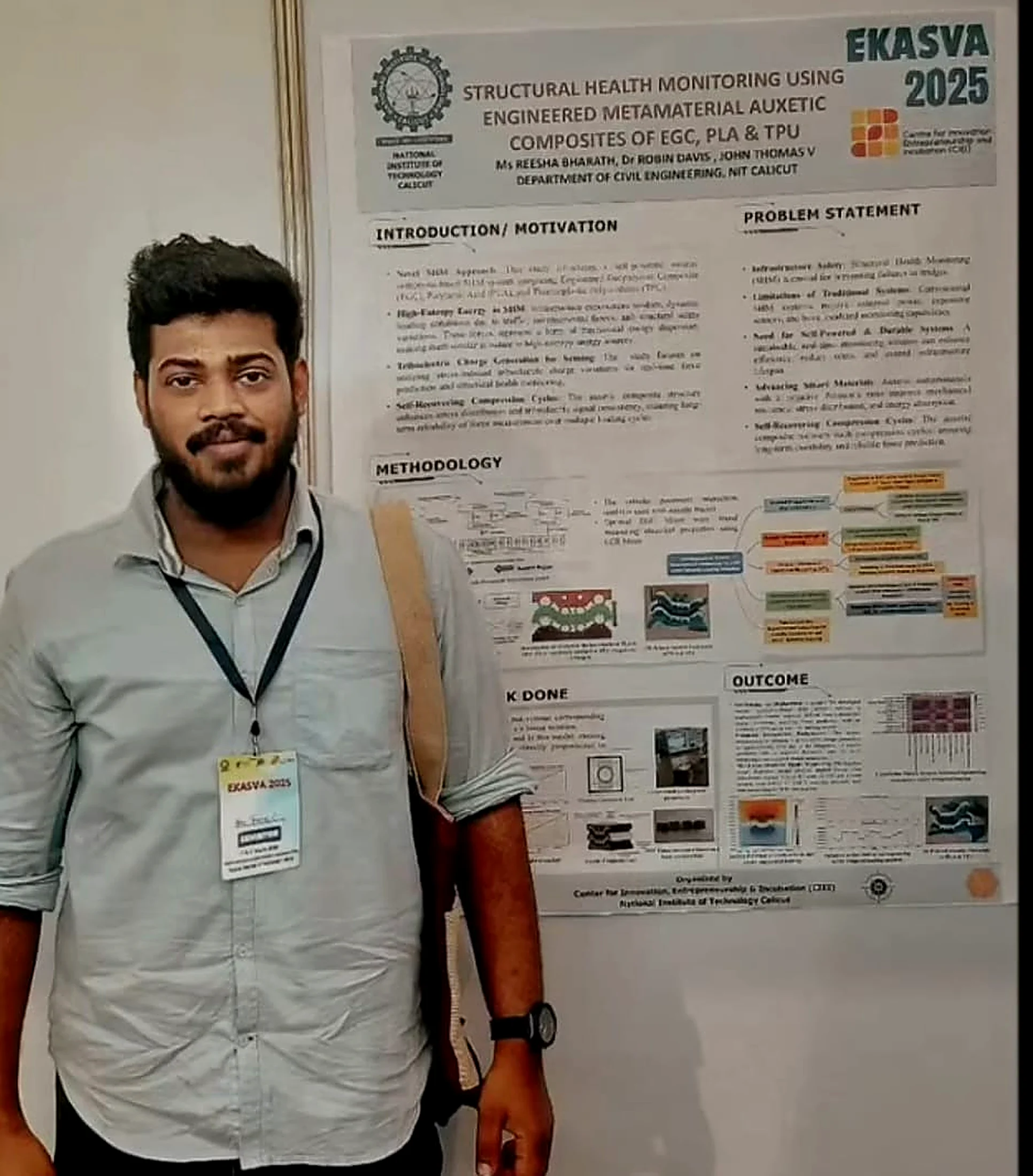
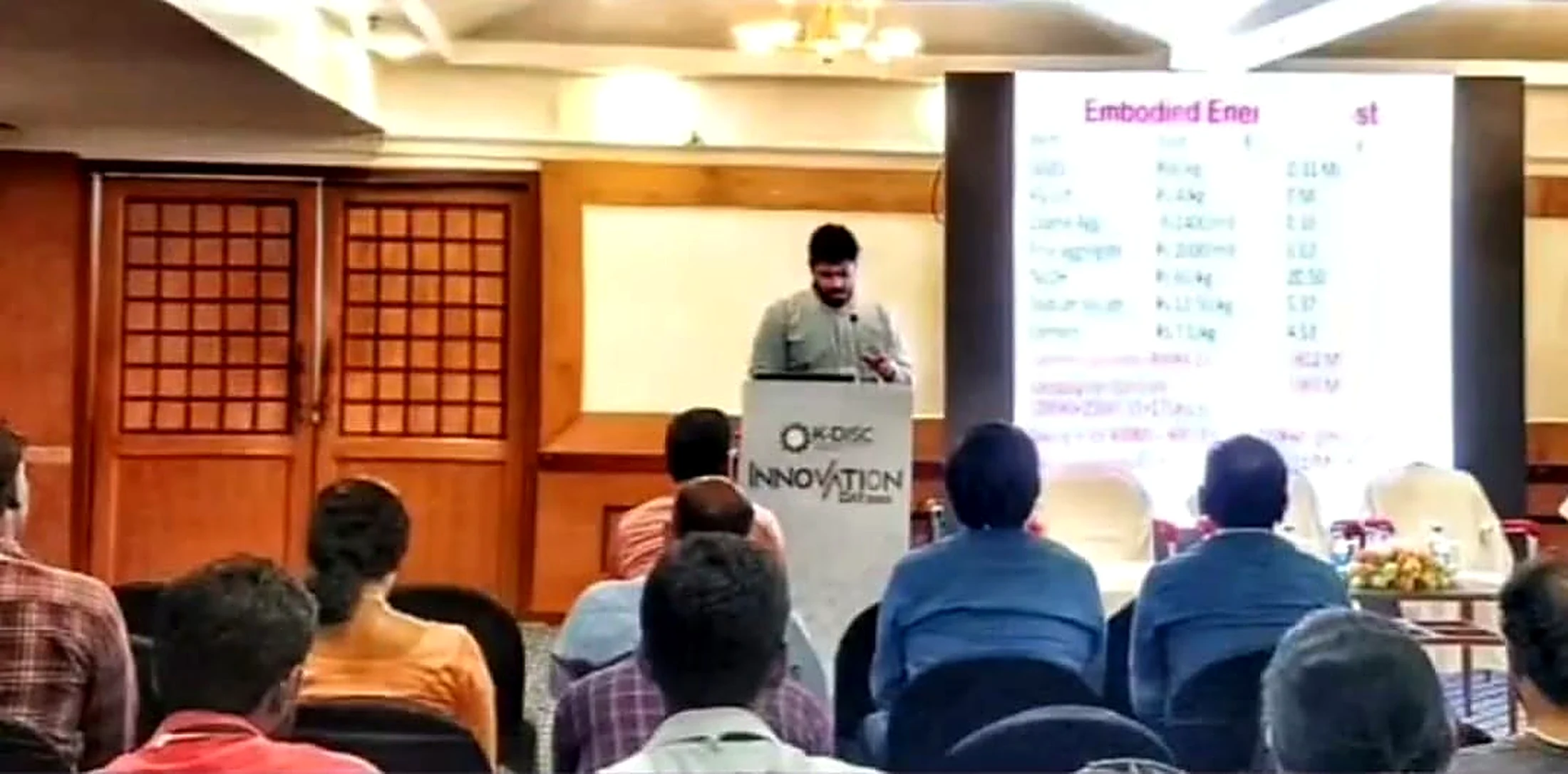
John Thomas V received the NITCP 2019 Award, NITTTR Kolkata, the Young Innovators Program grant from the Government of Kerala and K-DISC in 2018, and an SIP research grant at NIT Calicut in 2024. Dr. Thomas John V's sustainable construction work was recognised at the Engineer Awards 2024 by Vanitha Veedu.
*Reported range for geopolymer/alkali-activated concretes vs. comparable OPC concrete in published literature; final savings depend on materials, transport and mix design.

Founder of GEOPOLYX® and a structural engineer. He leads practical mix delivery, alkali-activated binder advisory, material optimization and project implementation support. His postgraduate work at NIT Calicut (M.Tech, Structural Engineering) included engineered geopolymer composites, with conductive EGC developed for tailored triboelectric energy-harvesting applications. His current focus is sustainable binder systems, prefab and in-situ applications, repair material mixes and tailored component development.
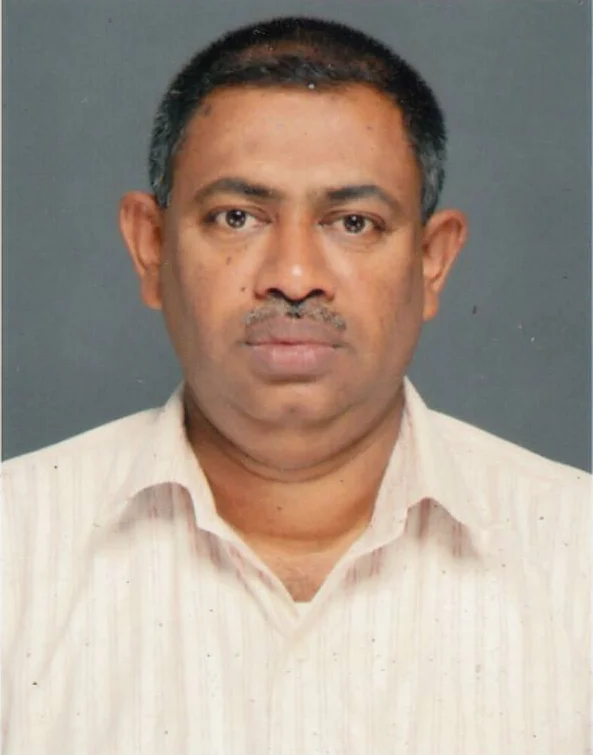
Engineer, teacher and materials researcher who began geopolymer research in 2012 during his M.Tech at Cochin University of Science and Technology and completed his PhD at CUSAT in 2025 with research rooted in geopolymers. A long-time faculty member at Govt. Maharaja's Technological Institute, Thrissur, founder of House of Innovations and consultant at the School of Innovative Thoughts, he anchors the scientific foundation behind the GEOPOLYX® material range.
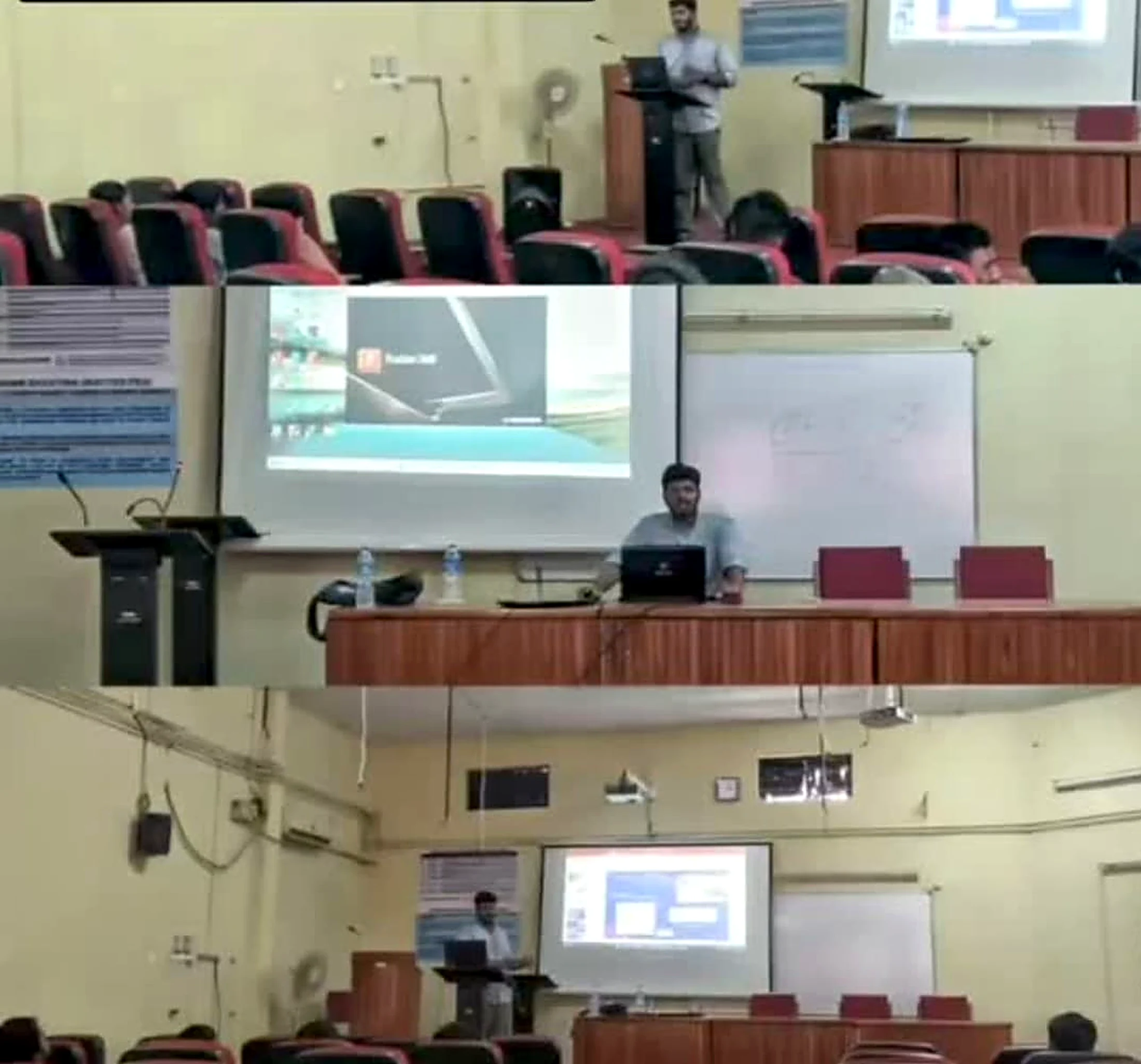
From national institutes to state innovation councils - sharing alkali-activated materials science with the engineers who will specify, test and build with it.
These capabilities are available for scoped pilots, production collaboration, licensing and technology transfer with serious partners.
Project-specific binder development, mix optimization, component trials and field pilots with construction and manufacturing teams.
Partner-supported production of everyday geopolymer components and site-usable mixes with documented QA and testing pathways.
Technology transfer packages for serious partners, including mix strategy, production guidance, documentation and implementation support.
Open to aligned investors and regional partners who can help take zero-cement geopolymer materials into larger construction markets.
For geopolymer mix design, binder advisory, repair material development, pilot projects, material optimization, precast manufacturing collaboration, investor discussions or technology transfer, write to us. For structural engineering, continue to STRUCTOLYX®.
Rooted in Thrissur, Kerala, India. Working worldwide.